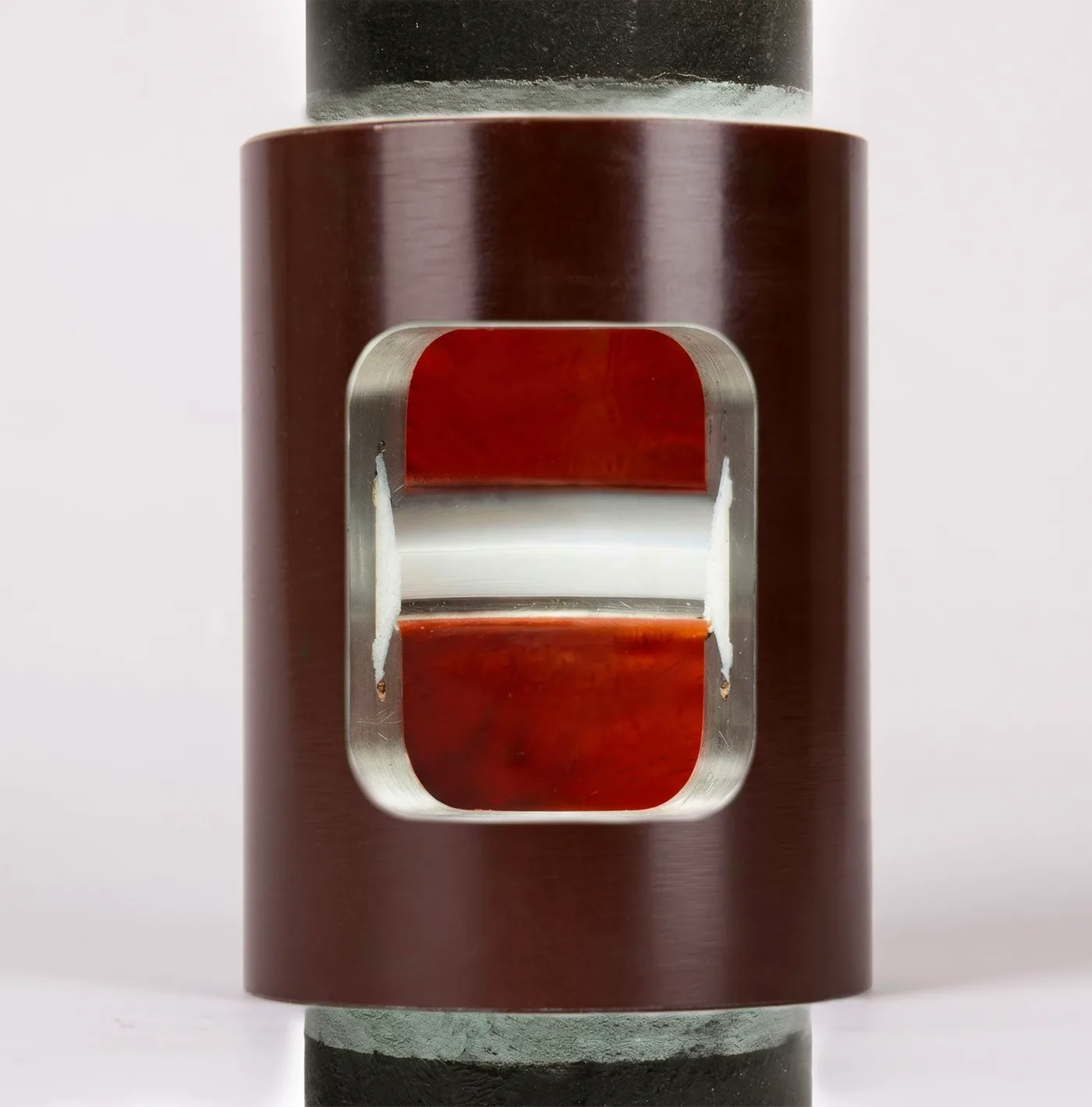
Uneven coating
Epoxy coating is thinner on thread crests and thicker in the roots. Make-up creates local overloads and chipping.
Patent RU 197 702 U1
Protecting tubing thread joints in corrosive well environments
Time-proven solution for workover stock and challenging wells

Industry studies (API, SPE, NACE, DNV GL) attribute 55 % of tubing failures and 86 % of casing failures to the threaded connection. It is here that the coating breaks off and bare steel becomes a hotspot of corrosion and failure. Conventional solutions address the problem only partially, leaving a number of weak points:
Epoxy coating is thinner on thread crests and thicker in the roots. Make-up creates local overloads and chipping.
Stresses are distributed unevenly. Micro-cracks appear and let the corrosive fluid in.
After 3–6 make-and-break cycles the coating breaks down. Bare steel becomes a site of intense corrosion.
The most vulnerable spot is the pipe end. The coating chips and peels, leaving the metal exposed.
Under high loads and during make-up, elastomeric inserts extrude and shift, reducing the sealing efficiency of the connection.
There is no mechanism to control make-up depth and prevent over-torque.
The M2® modified coupled connection is a standard API / GOST coupled connection with an 8- or 10-turn thread, with a polymer ring of a special conical shape installed in the middle section of the coupling. The ring is made of wear-resistant materials (engineering plastics) and works as an elastic barrier.
During make-up the first thread turns of the pipe cut into the polymer ring, sealing the connection and fully covering the J-area.
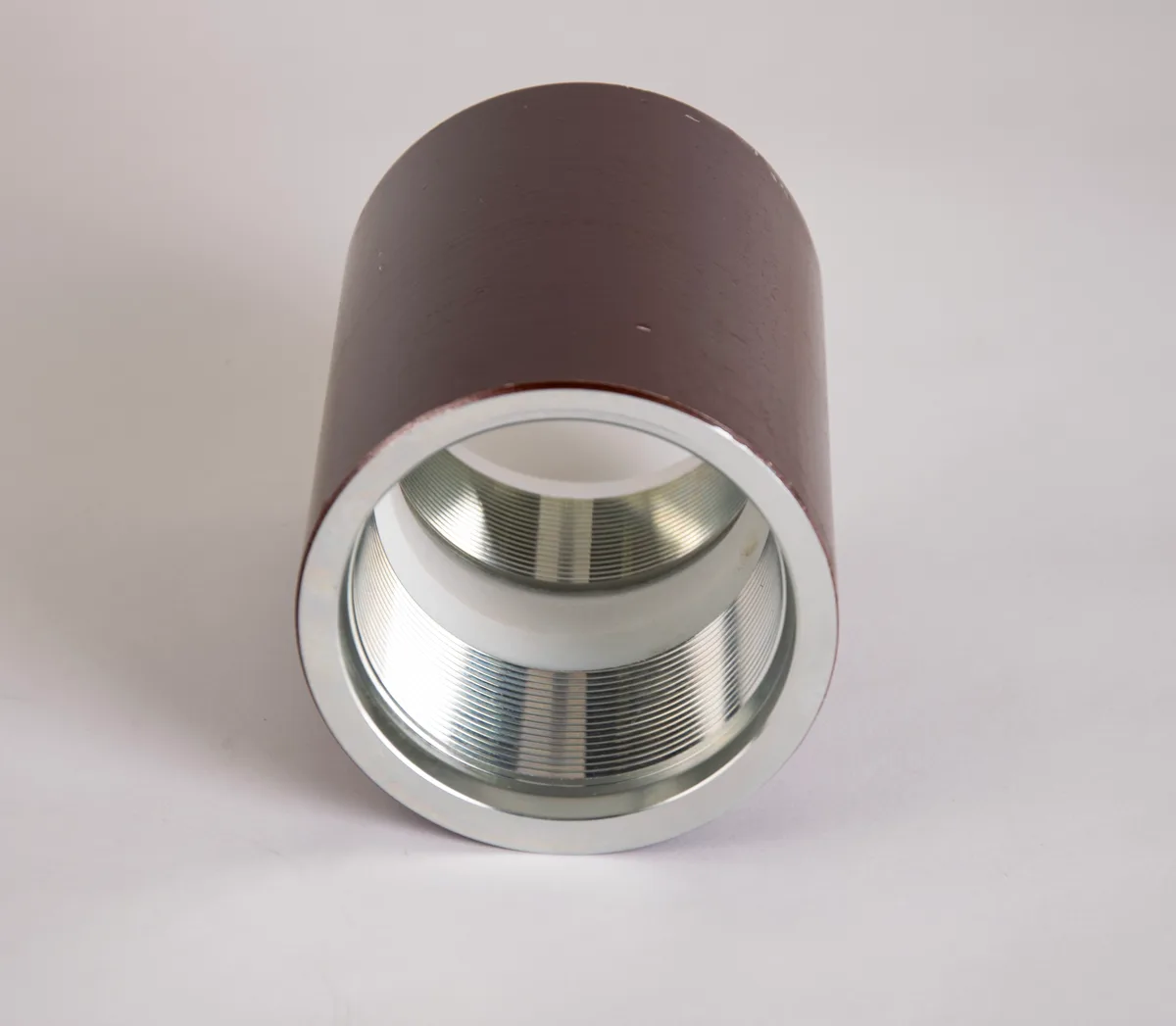
The special ring geometry compensates for thread tolerances — deviations within GOST and API limits.
Physically covers the pipe end where mill coating typically breaks off. Creates a reliable barrier.
The ring deforms within 15–18 % — inside the polymer elasticity range. It fills every micro-gap in the thread.
Smooths out the gaps that appear under string tension and cyclic loads.
8–10+ cycles guaranteed with no loss of seal integrity. Ideal for workover stock.
Once optimal deformation is reached, the ring builds up resistance — helping avoid over-torque.
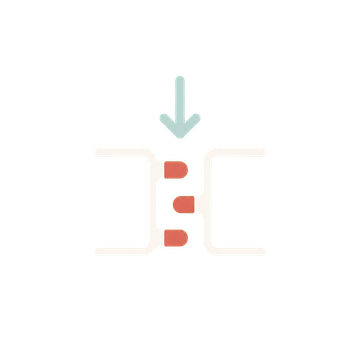
During make-up the pipe thread cuts into the polymer ring. The ring deforms plastically, distributing the load evenly and filling every micro-gap between the threads.
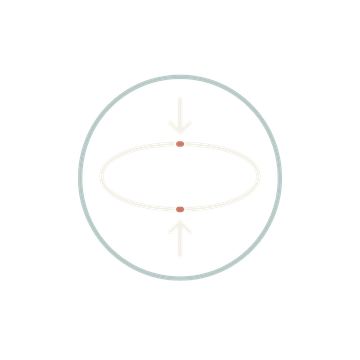
Deformation (within 15–18 %) lets the ring act as an elastic damper rather than a rigid stop. This preserves the seal even under cyclic loads and vibration.
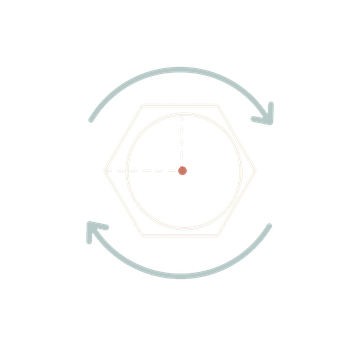
The asymmetric ring shape and its plasticity level out thread deviations within GOST / API limits, creating a labyrinth seal along the whole connection.

The ring physically covers the pipe end, preventing contact between the corrosive fluid and the metal. This is where standard coatings break off, while M2® creates a reliable barrier.
The polymer compensates micro-movements caused by string tension, sucker-rod impacts (in SRP wells) and vibration, preventing fatigue failures and preserving the seal.

As the ring deforms, make-up resistance builds up smoothly. This serves as a natural indicator of the correct torque, ruling out over- and under-torque.
| Seal material | PTFE / PE-UHMW / PEEK (selected for the well fluid) |
|---|---|
| Make-and-break cycles | 8–10+ with no loss of seal integrity |
| Operating temperature | −200 °C to +260 °C (short-term up to +300 °C) |
| Maximum pressure | up to 10,000–15,000 psi |
| Compatible tubing sizes | 2⅜", 2⅞", 3½", 4½" (API 5CT) |
| Thread type | API 8rd EUE / BTC and analogues, 8–10-turn GOST threads |
| Controlled ring deformation | 15–18 % (within polymer elasticity) |
| J-area protection | Full coverage of the pipe end |
| Applicability | External-upset tubing, including internally coated and lined pipe |
The only solution that physically covers the pipe end, ruling out corrosion at the most vulnerable spot.
2–3 times more cycles than standard coated couplings. Ideal for workover stock and frequent tripping.
The asymmetric ring shape and polymer plasticity level out API and GOST thread tolerances.
Reduces the risk of fatigue failure under vibration and cyclic loads.
Natural make-up torque control helps avoid over- and under-torque.
Longer run life and fewer emergency workovers. Lower tubing replacement and downtime costs thanks to high chemical resistance to CO₂, H₂S and highly mineralised fluids.
Installs like a regular API or GOST coupling, with no changes to technology or equipment.
| Parameter | Standard coupling | M2® coupling |
|---|---|---|
| Repeated make-and-break | 3–6 cycles | 8–10+ cycles |
| J-area protection | Poor — coating chips and fails | Full — the ring covers the pipe end |
| Thread tolerance compensation | Low | High — asymmetric ring |
| Gap filling under load | None | Effective — damping action |
| Make-up torque control | None | Natural torque feedback |
| Corrosive environments | Limited | High resistance |
The M2® seal ring material is selected individually for the temperature, pressure and chemical composition of the specific well. We offer three engineering plastics, each optimal for particular conditions.
Ultra-high-molecular-weight polyethylene
An engineering thermoplastic for extreme mechanical loads. Self-lubricating, with minimal moisture absorption.
Recommended: for wells with abrasive fluids and frequent make-and-break cycles
Polytetrafluoroethylene
A fluoropolymer with exceptional chemical resistance, including oxidizing acids. The base material of the M2® connection.
Recommended: for most wells with high temperatures and aggressive fluids (CO₂, H₂S, high salinity)
Polyetheretherketone
An engineering thermoplastic for especially severe service — gas wells with large pressure and temperature swings.
Recommended: for gas wells with rapid gas bleed-off, and for wells with aggressive fluids at high temperatures
Important. The exact material is selected from well data — temperature, pressure, CO₂ and H₂S content, presence of abrasive particles. Contact our specialists to calculate the optimal option.
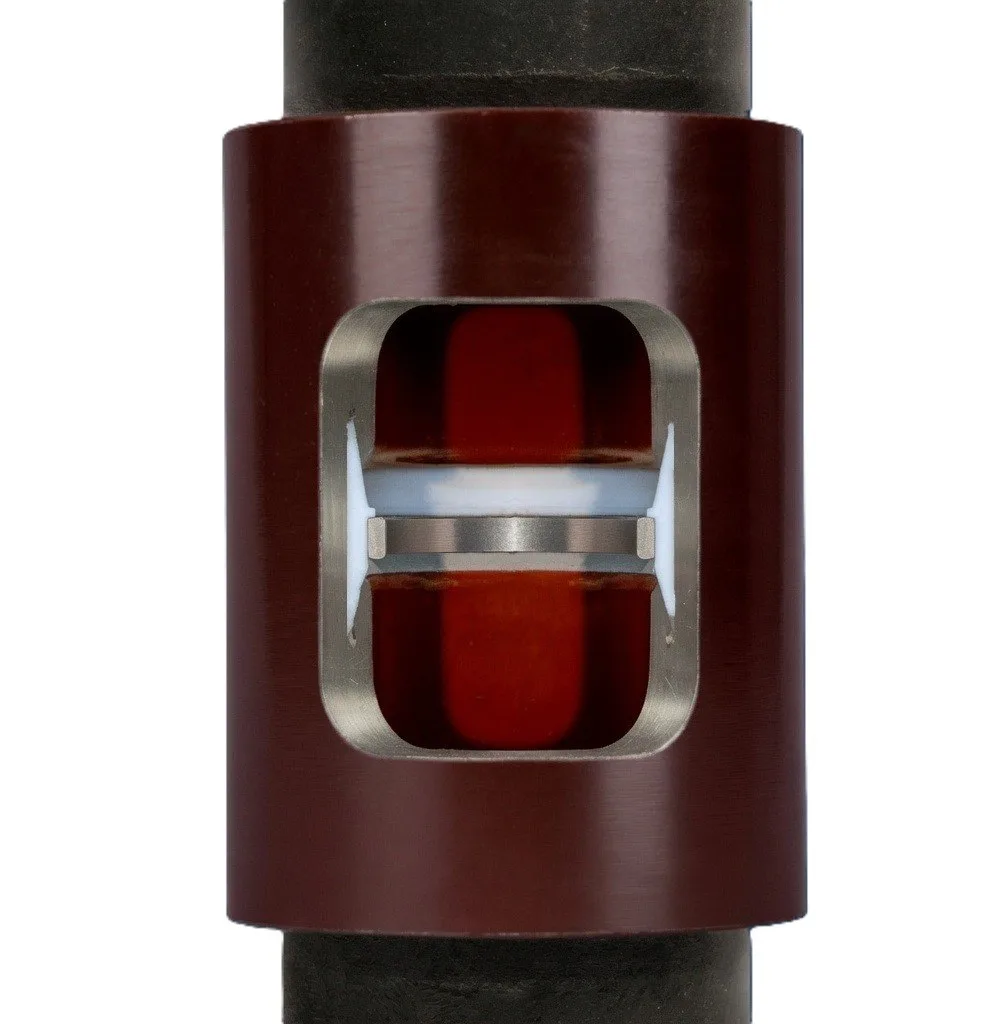
For gas wells with high temperatures and frequent, rapid gas bleed-off, the M2® connection is supplied with an additional metal ring in the seal assembly.
Why it is needed:
Up to 8–10+ make-and-break cycles with no loss of seal integrity — 2–3 times more than standard couplings. Allows more interventions without replacing the tubing string, saving on new pipe.
High water cut, CO₂ and H₂S presence. The M2® polymer ring resists aggressive fluids and fully covers the J-area, preventing corrosion at the most vulnerable spot of the connection.
Intensive operation requires frequent tripping. M2® withstands 2–3 times more make-and-break cycles than standard couplings, cutting pipe replacement costs and downtime.
Corrosion protection when injecting produced water, CO₂ and other aggressive agents. M2® keeps the seal intact even at high injection pressures, preventing leaks and thread damage.
Unplanned workovers on such assets are especially expensive. M2® minimises the risk of connection failures, extending run life and reducing emergency tripping.
Where premium connections are economically unjustified and standard coated API couplings are not reliable enough, M2® offers the optimum: below premium prices, with 2–3 times the service life of standard couplings.
M2® performance is proven by operation on real assets in corrosive environments.
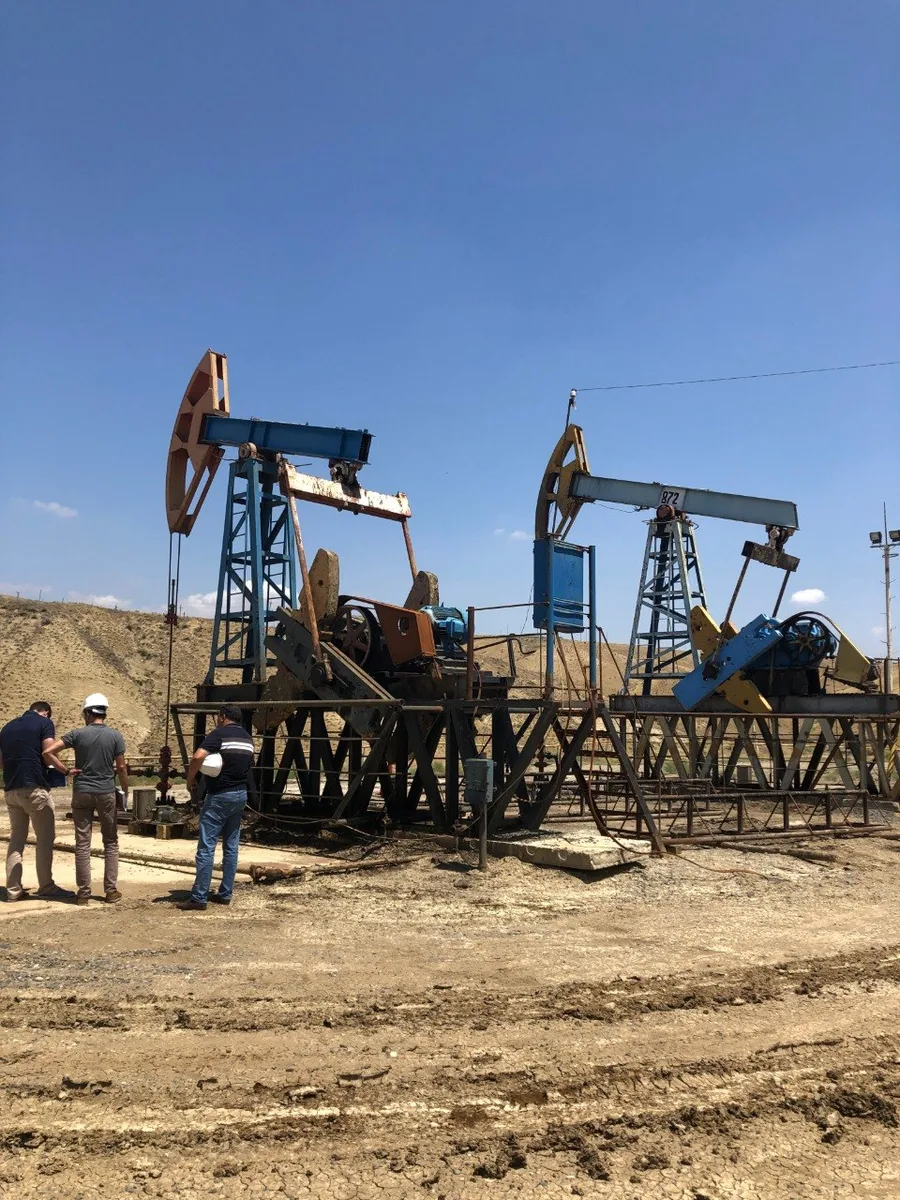
Mishovdag field, Azerbaijan
delivery — October 2019
Seal ring material: ultra-high-molecular-weight polyethylene (PE-UHMW)
Confirmed effect: more than 35× longer service life of the coupled connections compared with standard API couplings in wells operated with sucker-rod and electric submersible pumps. Sustained seal integrity and effective J-area protection under exposure to aggressive environments.
Bibi-Heybat field, Azerbaijan
delivery — February 2017
Seal ring material: polytetrafluoroethylene (PTFE)
Confirmed effect: more than 20× longer service life of the coupled connections compared with standard API couplings in wells operated with sucker-rod and electric submersible pumps. The M2® connection has proven its performance under extreme chemical exposure, including high CO₂ and H₂S content and highly mineralised formation water. Not a single corrosion failure in the J-area was recorded over the whole service period.
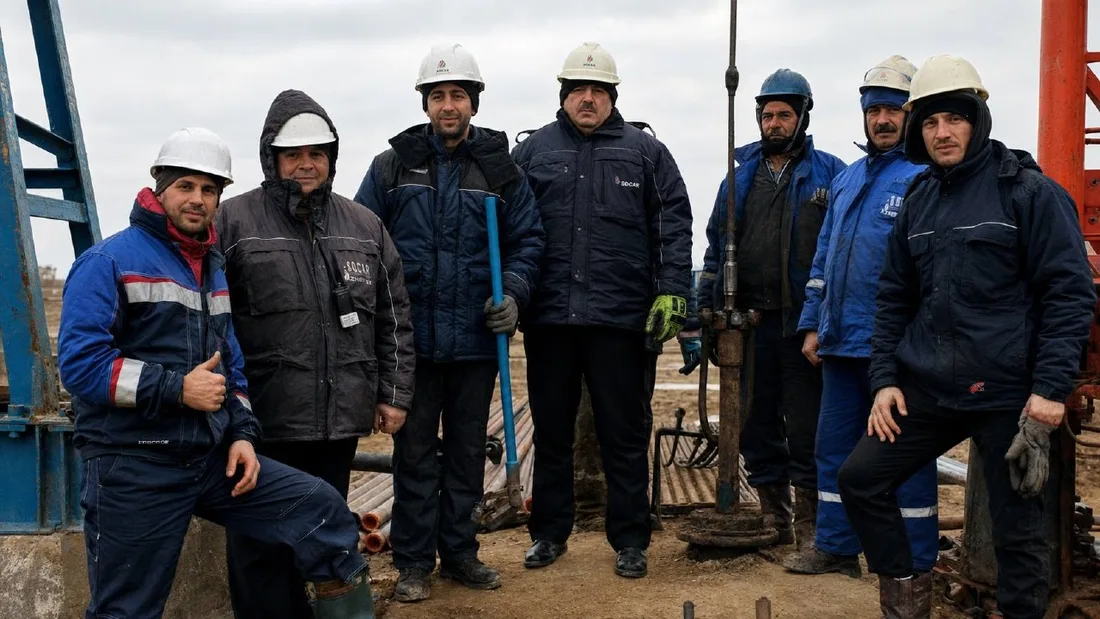
Vankor field, Russia
pilot field trials
Seal ring material: polytetrafluoroethylene (PTFE)
M2® connections have been run in hole. Results will be summarised once the tubing string is pulled. Preliminary interim data confirm the efficiency of the solution.
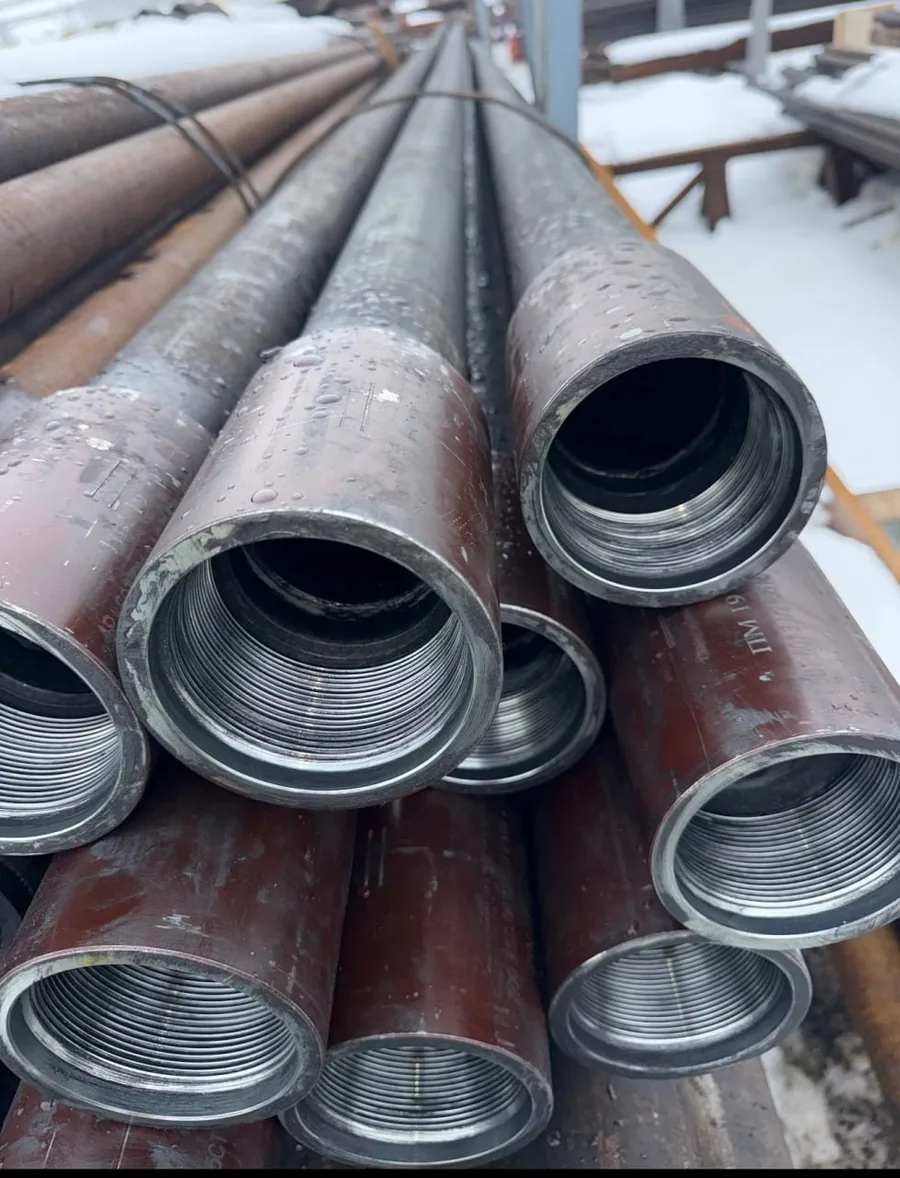
Over more than ten years of operation on producing assets in Azerbaijan, M2® connections have confirmed their performance in aggressive environments, delivering 20× and greater service life of coupled connections compared with standard API couplings.
Send us your well operating parameters — temperature, pressure, fluid composition and string operating features. We will select the optimal seal ring material and prepare technical recommendations and an individual commercial proposal.